
-
About UsWuxi Taiheng Foundation Engineering Co., Ltd. was established in February 2018. It is an eight-in-one specialized enterprise focusing on the sales of small and medium-sized piling machinery, equipment leasing, foundation construction, second-hand circulation, remanufacturing, accessories sales, operator training, construction method consultation and promotion.

News Center
How to prevent common problems in pile foundation construction?
Release time:
2022-10-26
Pile foundation construction is an important process in engineering construction. However, due to the wide variety of pile foundations, large differences in construction technology and complex construction stratum structure, quality problems are prone to occur in pile foundation construction. Therefore, in the process of pile foundation construction, the operation should be carried out in strict accordance with the relevant requirements. If problems are found, appropriate measures should be taken to deal with them in time. What are the common problems in pile foundation construction? How to prevent and treat these problems?
Pile foundation construction is an important process in engineering construction. However, due to the wide variety of pile foundations, large differences in construction technology and complex construction stratum structure, quality problems are prone to occur in pile foundation construction. Therefore, in the process of pile foundation construction, the operation should be carried out in strict accordance with the relevant requirements. If problems are found, appropriate measures should be taken to deal with them in time. What are the common problems in pile foundation construction? How to prevent and treat these problems?
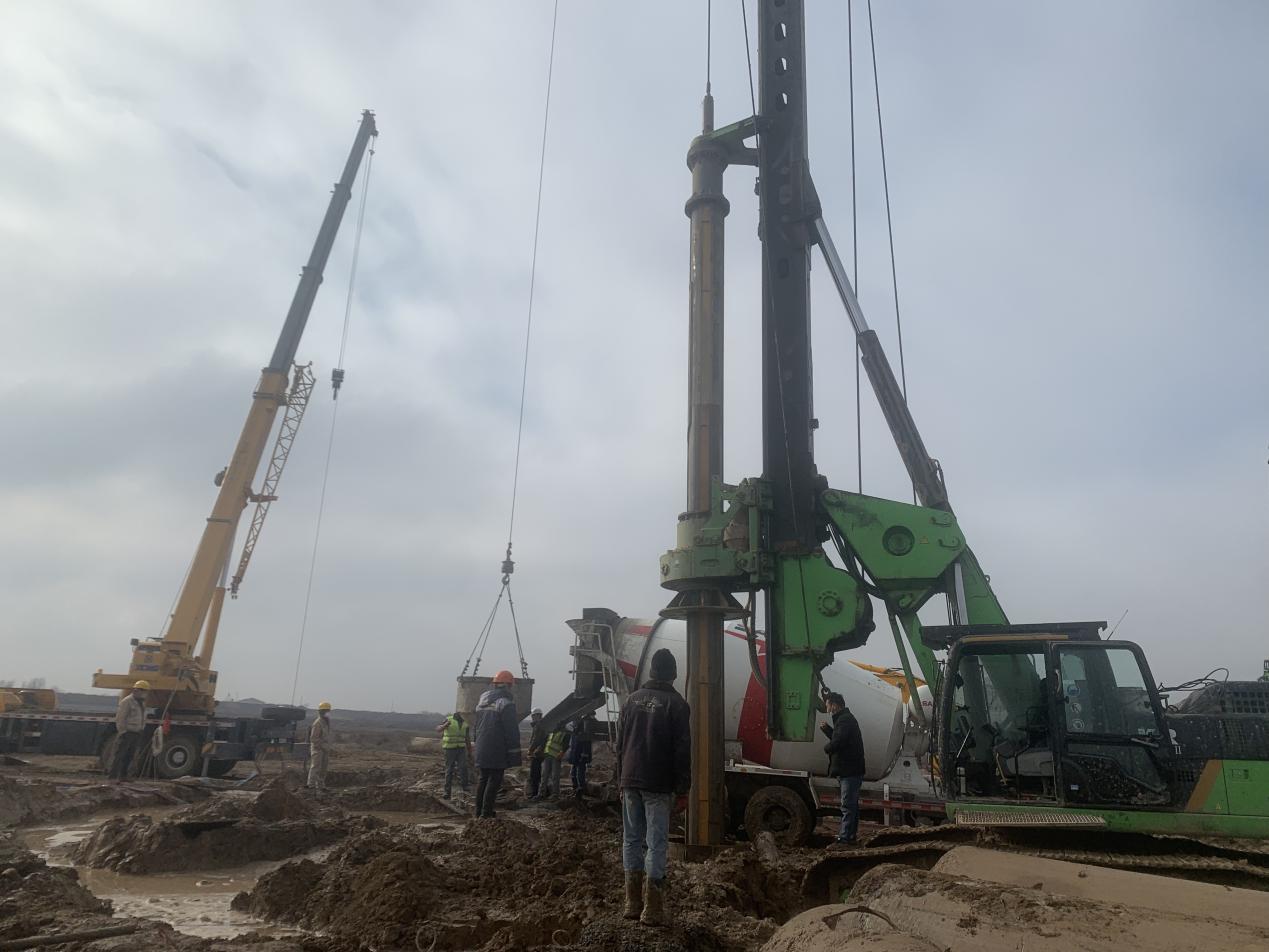
1. Broken pile
In the pile foundation construction, the concrete strength of the pile is often insufficient; the deviation of the pile starting point or the fulcrum position; the hard obstacle encountered in the pile sinking process; the pile body is broken due to excessive hammering force and too many times during the pile sinking process.
Precautions:
(1) When making piles, aggregate gradation and concrete workability shall be ensured, and the concrete pouring time and interval time shall not be greater than the initial setting time of concrete. At the same time, the pile should meet the strength and straightness requirements.
(2) For the pile foundation with quicksand layer, additives with low density, good viscosity and strong wall fixing ability should be added, such as bentonite, hydroxylated fiber, sodium chrome iron lignosulfonate, coal alkaline agent, sodium carbonate, etc., to enhance the bonding performance of mud.
(3) Excessive pile density should be avoided, and the vibration pile spacing should not be greater than 4 times the pile diameter. However, if the pile spacing is less than 3.5 times the pile diameter, the construction interval of adjacent piles should be controlled.
2. Slurry leakage
In the process of pile foundation construction, shallow burial of pile casing, lax joints, insufficient backfill compaction, cracks or karst caves in rock layers, etc. often lead to slurry leakage, mainly manifested as bubbles or muddy water on the outer surface of the pile casing.
Precautions:
(1) Appropriately increase the amount of clay, adjust the density of mud, and backfill around the casing with clay to prevent leakage at the bottom joints of the casing.
(2) The construction method of slow drilling shall be adopted before and after the drill bit passes through the casing to reduce the height of hammer rise, ensure the effect of mud wall protection, and avoid excessive vibration, resulting in sand liquefaction and slurry leakage.
(3) When slurry leakage is found, if the slurry leakage at the joints is not serious, cotton and cotton wool can be used to seal the joints; if there is serious water leakage, the casing should be dug out and re-buried after repair.
3. Necking
In the construction of pile foundation, due to the rapid wear of the drill bit, the failure to repair in time, the rapid extubation, the poor performance of the retaining wall mud, the failure to pour concrete in time after the hole is formed, the drilling footage is too fast, and the phenomenon of necking often occurs.
Precautions:
(1) Before drilling, the soil layer shall be judged. If there is a soft soil layer or plastic soil, the hole should be swept to expand the aperture; if there is a soil layer with adverse geological conditions such as water expansion, a mud wall with a water loss rate of less than 3~5mL/30min should be used to reduce water loss.
(2) The extubation speed should be controlled. In general, the soil layer should be 1 m/min, and the junction of soft soil layer and soft and hard soil layer should be 0.3~0.8 m/min.
(3) During the construction, the drill bit should be checked in time. If wear occurs, the more worn bit should be repaired and reamed to achieve the design pile diameter.
4. Collapsed hole
In the process of pile foundation construction, insufficient relative density of mud, shallow burial of casing, improper hole cleaning operation, collision with hole wall when lifting drill bit and steel cage, long empty drilling time, etc. often lead to pile hole collapse.
Precautions:
(1) When burying the casing, the clay should be compacted at the bottom and around the casing, and backfilled evenly around the casing. At the same time, the joints between the casing should be sealed to ensure the stability of the casing.
(2) When punching holes in loose silt or quicksand, mud or mud with high relative density, high viscosity and large colloid ratio should be selected, and the footage speed should be controlled.
Related News
2026-06-01
Address: No. 345 Yan Xin Road, Economic Development Zone, Wuxi City, Jiangsu Province
Sales Hotline:+8618112379331
E-mail:tyhen@tysim.com
Youtube
Tiktok
Copyright © 2024 Wuxi Tyhen Piling Equipment Rental Co., Ltd. Business License