-
About UsWuxi Taiheng Foundation Engineering Co., Ltd. was established in February 2018. It is an eight-in-one specialized enterprise focusing on the sales of small and medium-sized piling machinery, equipment leasing, foundation construction, second-hand circulation, remanufacturing, accessories sales, operator training, construction method consultation and promotion.

News Center
Construction Case Analysis of Small KR125 Drilling Rig Xuzhou Institute of Technology
Release time:
2021-07-28
In April 2013, a KR125 series rotary drilling rig produced by Pinghan Heavy Industry was transferred to Xuzhou Institute of Technology to participate in the second phase of the college's construction, including 12 teachers' apartments and more than 1500 bored piles.
In April 2013, a KR125 series rotary drilling rig produced by Pinghan Heavy Industry was transferred to Xuzhou Institute of Technology to participate in the second phase of the college's construction, including 12 teachers' apartments and more than 1500 bored piles.
There are also 5 other brand drilling rigs under construction at this construction site, with models ranging from 100 to 220, reflecting the trend of subdivision of domestic drilling rig models, and at the same time giving KR125 the opportunity to compete with multiple and various rotary drilling rigs.
There are three kinds of pile depth in this construction, which are 24 meters, 27 meters and 29 meters respectively. Pile diameter 600mm. The geological conditions are mainly sand and clay. From the ground down, about 1 meter is clay; 2-9 meters is fine sand layer; 10-15 meters is sand layer; 15-20 meters is muddy clay; 20 meters below is clay layer.
In this kind of sand-based cast-in-place pile construction, the quality of the slurry directly affects the hole-forming speed and hole-forming quality, and the construction needs to be cautious.
The following points shall be done for the construction of static slurry protection process:
1) 3 m casing shall be buried to protect the orifice;
2) The specific gravity of the used mud is about 1.15;
3) The mud viscosity is controlled between 18-20;
These two items of data shall be measured by professional measuring instruments. In the specific construction process, it cannot be taken for granted based on experience and affect the mud quality.
The slurry raw material contains clear water, clay and additives. Additives are mostly bentonite, carboxymethyl cellulose, soda ash and other substances, the specific role of the following:
1) bentonite: good water swelling performance, as well as dispersion and suspension of slurry, low density, good viscosity, less sand content, less water loss, thin mud skin, strong stability, strong solid wall ability and other advantages, in the sand layer in the construction, mud bentonite is an indispensable important ingredient. Bentonite is divided into sodium, calcium and lithium. The effect of pulping is good for sodium, followed by calcium, and relatively poor for lithium. In practice, calcium bentonite is widely used because of its low price and good stability. The amount of bentonite is generally 8%, and the amount of poor bentonite should be increased to about 12%.
2) carboxymethyl cellulose: increase the viscosity of the mud, can form a high viscosity colloid, solution, so that the surface of the soil layer to form a film, so as to protect the hole wall off, and reduce the role of water loss. In the actual construction, it is recommended to add carboxymethyl cellulose to the mud to enhance the effect of mud protection and improve the quality of drilling. The mixing amount should be controlled at 0.1-0.3% of bentonite.
3. Soda ash: Soda ash is called sodium carbonate, which can increase the PH value of mud to about 10. If the PH value in the mud is too small (acidic), the clay particles are difficult to decompose, the viscosity is reduced, the water loss is increased, the fluidity is relatively reduced, and the drilling tool will be corroded. If the PH value is too large, the mud will penetrate into the clay of the pore wall, soften the surface of the pore wall, weaken the cohesion between the clay particles, and cause the collapse of the cracking pore wall. PH value of 8-10 is appropriate, can increase the hydration film thickness, improve the colloid rate and stability of the mud, reduce water loss. The usage rate in the construction site is higher. Generally, the amount of bentonite is 0.3-0.5.
The above 3 kinds of additives are common in the construction process. The dosage listed above is the usual situation and is for your reference only. The specific additive amount should be determined according to the specific conditions of the construction site.
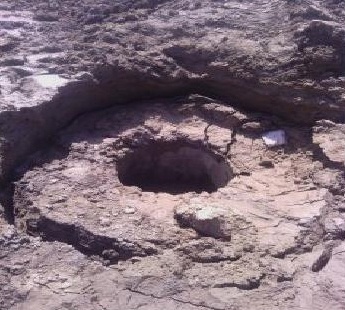
Photo of hole collapse caused by bad mud
The phenomenon of hole collapse and diameter shrinkage occurred during the early construction of KR125 rotary drilling rig. In order to eliminate such phenomena, it was decided to increase the mud weight, reduce the piling speed, and reduce the waiting time for perfusion after hole formation. Effectively reduce the occurrence of hole collapse and diameter reduction. Summing up the piling experience of sand layer, it is not difficult to see that in the construction of sand layer as the main formation, speed cannot be blindly pursued. The sand layer must abide by the principles of less footage and slow drilling, minimize disturbance to the hole wall, reasonably allocate mud, ensure sufficient mud in the hole, and excavate slurry return pool when necessary. And pay attention to check the amount of sediment at the bottom of the pile, make a good pile hole, to ensure the quality of the pile.
After the construction was stable, the KR125 drilling rig of Pinghan Heavy Industry Co., Ltd. was constructed at Xuzhou construction site, with about 8 piles per day. The efficiency was higher than that of other types of drilling rigs, and the total amount of holes formed during construction was 40% higher than that of other drilling rigs. The reasons are summarized as follows:
KR125 rotary drilling rig is an integral transport drilling rig, and construction will begin within 2 hours after entering the site, without cumbersome drilling rig installation procedures, saving time and effort;
The torque of K125 rotary drilling rig is 125KN.m, which fully meets the requirements of pile diameter and pile depth at the construction site. Although the torque of other models is large, there is no advantage;
KR125 power head speed is fast, with fast forward and reverse function, conducive to slag;
The 600 diameter of the body open drilling bucket, the use of rapid forward and reverse dumping soil;
The pile diameter of this site is small, and the large force of the large drilling rig cannot be used;
KR125 drilling rig is small in size and light in weight. Under the premise of meeting the stability requirements, the lowering, lifting and turning actions are faster than other models, which is reflected in the sensitive action;
During the construction of this project, the power of the small drilling rig is small, and the fuel consumption for the same work is nearly half that of the large model of 22 models, saving tens of thousands of yuan a month.
The bathymetric display device and rotary display device of KR125 drilling rig are unique technologies, with high display accuracy and bottoming protection function. The operator knows the hole forming situation well and makes accurate judgment;
The control system developed in cooperation with the Robotics Research Institute of Tianjin University has an intuitive and friendly display interface, easy operation, integrated information display, and common operations are all located on the first layer of the program.
Pinghan Heavy Industry is committed to professionally manufacturing small and medium-sized rotary drilling rigs that are affordable, affordable and affordable for civil construction. Adhering to this concept, the Pinghan team starts with various details such as the various actions of the drilling rig construction, the various steps of the operator's operation, and the various intelligent information required for the construction, and continuously improves the products, improves the construction efficiency and reliability of the whole machine, and enables users to experience the advantages of the drilling rig in actual use. The data indicators of this site construction verify the effect and benefit of this concept from all aspects.
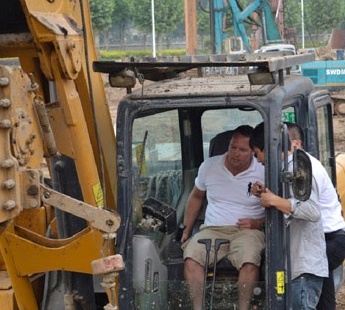
Australian Customer Field Operations
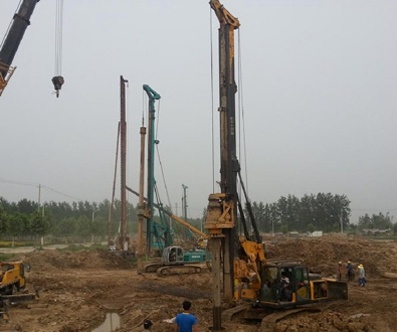
KR125 Site Exhibition
Related News
2026-06-01
Address: No. 345 Yan Xin Road, Economic Development Zone, Wuxi City, Jiangsu Province
Sales Hotline:+8618112379331
E-mail:tyhen@tysim.com
Youtube
Tiktok
Copyright © 2024 Wuxi Tyhen Piling Equipment Rental Co., Ltd. Business License